
Shattered Innocence: Violence Against the Vulnerable – Female Genital Mutilation (FGM)
Both women and men play a crucial role in abandoning female genital mutilation. Nothing can justify this violence against women and girls, and no one should stay silent. - EU statement
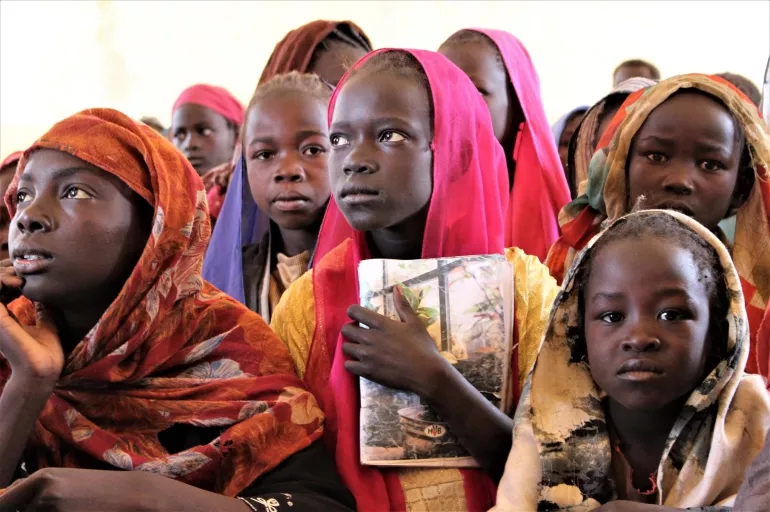
“My parents told me I had to undergo FGM to become a mature woman,” Ester recalled. Ester later became a peer educator in Tanzania, helping to educate her community about the harmful effects of female genital mutilation.
She was too young to understand what those words truly meant. Like many girls in her community, she understood the ceremony through the eyes of a child. What excited her was the promise of a new bag filled with clothes—the same kind of gifts the other girls received when they went through the ceremony. She looked forward to the celebration, the attention, and the feeling of becoming part of something the women and girls around her had experienced before.
“I eagerly agreed,” she recalled, “unaware of what awaited me.”
Then the day came.
What had been presented to Ester as a rite of passage became an experience of unimaginable pain. She remembers the cutting, the blood, and the terror with heartbreaking clarity.
“But when the day came, and I was cut—oh God, I felt like I was half-dead. I cried uncontrollably as I saw blood between my legs. That was my reality.”
For Ester, childhood changed in a single moment.
Yet the physical pain was only the beginning. In her community, undergoing female genital mutilation was not merely regarded as a traditional ceremony. It marked a girl as having entered a new stage of life. Once circumcised, a girl could be regarded as ready for marriage—even when she was still a child.
This is one of the devastating ways in which harmful practices can reinforce one another. FGM can serve as a social marker of a girl’s transition from childhood to womanhood, while child marriage can follow soon afterward. The result is a cycle in which a girl is denied the time and freedom to remain a child, to continue her education, to develop her abilities, and to imagine a future of her own choosing.
For Ester and girls like her, the ceremony that was supposed to celebrate their passage into womanhood can instead become the moment when their innocence is shattered.
Behind every statistic about FGM is a child who may have been frightened, confused, or simply too young to understand what was being done to her. And behind this practice are families and communities in which traditions can become so deeply rooted that questioning them may seem almost impossible.
Ester’s story therefore begins a larger examination of violence against the vulnerable—not only violence that leaves visible wounds, but also the quieter forms of violence that restrict a girl’s choices, silence her voice, and determine the course of her life before she is old enough to determine it for herself.
When I first learned about the inhuman and harmful tradition of FGM and the devastating human rights violations inflicted upon young girls across the globe, I was overwhelmed with a profound sense of anguish and disbelief. As a parent, the thought of such brutality being imposed on innocent children was unfathomable.
When I look at my granddaughter who is 12 at the time of writing and her friends, I felt an overwhelming surge of love and protectiveness. They represent everything pure and hopeful, and the idea that there are countless girls like them who endure such unimaginable pain and loss of autonomy broke something deep within me.
The contrast was stark and deeply personal: the safety and opportunities my granddaughter enjoys juxtaposed with the suffering of those who are denied their basic rights simply because of where they were born or the culture, they were born into. It filled me with a mix of gratitude for their freedom and a burning urgency to do something—to speak out, to educate, and to contribute to the fight against this violation of innocence and dignity. That moment was not just one of sorrow, but also of awakening call to action to stand in solidarity with those who have suffered and to ensure a safer, kinder world for all children, no matter where they are.
FGM refers to all procedures involving partial or total removal of the female external genitalia or other injury to the female genital organs for non-medical reasons. The practice of FGM reflects deep-rooted inequality between the sexes and constitutes an extreme form of discrimination against girls and women. It is nearly always carried out by traditional practitioners on minors and is a violation of the rights of children.
The physical consequences of FGM can be immediate, severe, and, in some cases, life-threatening. Girls subjected to FGM may experience severe pain, excessive bleeding, shock, infection, difficulty passing urine, and problems with wound healing. Severe infections can lead to sepsis, which can be life-threatening and, in some cases, fatal. The harm does not necessarily end when the wounds heal. Survivors may experience chronic pain, recurrent urinary and genital infections, painful menstruation, excessive scar tissue, and pain during sexual intercourse. These long-term complications can affect women’s physical, reproductive, and sexual health throughout their lives. FGM can also increase the risk of serious complications during childbirth, including prolonged or difficult labor, excessive bleeding, and adverse outcomes for newborns. Psychological consequences, including anxiety, depression, and post-traumatic stress, may also persist long after the procedure itself.
For many girls, therefore, FGM is not a single traumatic event that belongs to the past. Its consequences can follow them through adolescence and adulthood, affecting their physical health, emotional well-being, relationships, reproductive lives, and future pregnancies. FGM is a deeply entrenched social norm, perpetrated by families for a variety of reasons, but the results are harmful. FGM is a human rights issue that affects girls and women worldwide.
Significant progress has been made in reducing FGM. Today, a girl is about one-third less likely to be subjected to FGM than she was 30 years ago. However, progress remains too slow and uneven to achieve the goal of eliminating the practice by 2030. Research has identified several promising and evidence-supported approaches to preventing child marriage, including community engagement, education, economic support, and interventions designed to transform harmful social and gender norms. However, important evidence gaps remain, particularly concerning how interventions can be effectively adapted, implemented, and sustained across different cultural and social contexts.
According to UNICEF, more than 230 million girls and women worldwide have undergone female genital mutilation FGM. Africa accounts for the largest share, with more than 144 million affected. Asia follows with more than 80 million, while approximately 6 million girls and women are affected in the Middle East. An additional 1–2 million girls and women are affected in small practicing communities and destination countries for migration elsewhere in the world. Evidence also suggests that FGM exists in some places in South America such as Colombia and elsewhere in the world including in India, Malaysia, Oman, Saudi Arabia, and the United Arab Emirates, with large variations in terms of the type performed, circumstances surrounding the practice and size of the affected population groups.
The prevalence of FGM varies dramatically across countries. The practice is almost universal in Somalia, Guinea, and Djibouti, where prevalence is 90 percent or higher, while it affects no more than 1 percent of girls and women in Cameroon and Uganda. The practice is also found in pockets of Europe, Australia and North America, which, for the last several decades, have been destinations for migrants from countries where the practice still occurs. It is also a concerning issue within the United States, particularly among immigrant communities originating from countries where FGM is traditionally practiced. The Centers for Disease Control and Prevention (CDC) estimates that over 500,000 women and girls in the U.S. have either undergone FGM or are at risk of the procedure.
FGM in the United States can be difficult to detect because it is a hidden practice within some communities and is rarely brought to the attention of law enforcement. The United States has prohibited FGM under federal law since 1996. The original federal statute, 18 U.S.C. -116, made it a crime to knowingly perform FGM on a person under 18. The federal law was strengthened in 2013 to make it a federal offense to knowingly transport a person under 18 from the United States to another country for the purpose of undergoing female genital mutilation (FGM).
Despite the federal ban and additional state-level laws, enforcement of these measures remains a significant challenge. In November 2018, during the trial of a Michigan doctor accused of performing FGM on nine young girls at a Michigan clinic, a United States District Court judge dismissed most of the charges. The judge ruled that the federal statute criminalizing FGM was unconstitutional, asserting that Congress lacked the authority to criminalize the practice, which should instead be left to individual states to regulate.
Some families have resorted to what is known as “vacation cutting,” taking girls outside the United States to countries where FGM is practiced. U.S. health authorities and law-enforcement agencies have documented concerns about this practice. FGM has also been performed within the United States, despite federal and state laws prohibiting it. As of May 2026, 42 U.S. states have enacted laws specifically addressing FGM. The eight states that do not yet have specific laws are Alabama, Alaska, Hawaii, Maine, Mississippi, Montana, Nebraska, and New Mexico. The District of Columbia also does not have a separate FGM statute.
By 2050, nearly 1 in 3 births worldwide will occur in the 30 countries in Africa and the Middle East where FGM is concentrated, and nearly 500 million more girls and women will be living in these countries than there are today. In Somalia alone, where FGM prevalence stands at 98 per cent, the number of girls and women will more than double. In Mali, where prevalence is 89 per cent, the female population will nearly triple.
To achieve the Sustainable Development Goal (SDG) target 5.3 by 2030, which calls for the elimination of FGM, the current rate of progress would need to accelerate by at least tenfold compared to the past 15 years. However, alarming global trends pose significant challenges to this goal and threaten to reverse the progress made so far. One such challenge is rapid population growth in some of the least-developed countries with the highest FGM prevalence rates. This demographic shift could increase the number of girls at risk of undergoing FGM from 4 million in 2020 to 4.6 million by 2030. Without urgent and intensified efforts, the global community risks falling short of its commitment to eliminate this harmful practice.
“FGM is a slow poison,” Ester emphasized. "Now, as we educate people about its effects, they are beginning to understand. In our village, we’ve formed a group of more than 15 members who meet weekly to plan educational sessions as peer educators. It’s tough work, but we’re making progress. Many young women in our community have been empowered. They are now running small businesses like soap and batik making. They’ve also created a Village Saving & Loan Association (VSLA), where they save money and access loans to support various ventures and needs."
Through her tireless efforts, Ester is helping to break the cycle of FGM and child marriage, offering a future of hope and opportunity to the next generation.
CONCLUSION
The persistence of FGM in the U.S. underscores the need for a multifaceted approach to address the issue. Legal frameworks must be coupled with community engagement and education to change cultural norms that perpetuate the practice. Healthcare providers and educators play a critical role in identifying at-risk girls and providing support to survivors, many of whom experience long-term physical and psychological consequences.
Efforts to combat FGM in the U.S. are further complicated by a lack of comprehensive data and cultural sensitivities surrounding the issue. Advocacy groups, along with federal and state agencies, are working to raise awareness and provide resources to affected communities. However, much work remains to ensure that all women and girls are protected from this harmful practice, regardless of where they live.
As I reflect on the painful realities and hard truths presented in this chapter, I am convinced that moving forward requires more than awareness—it demands moral courage, collective responsibility, and sustained action. Female genital mutilation is not a distant problem; it is a global human rights crisis that persists because silence, fear, and social pressure are allowed to prevail over compassion and justice.
Laws alone are not enough. Real change must be rooted in education, community-led dialogue, and the empowerment of women and men alike to challenge harmful norms without fear of isolation or retribution. Survivors like Ester remind us that transformation is possible when dignity replaces tradition and when communities are offered viable alternatives grounded in respect and opportunity. My hope is that we move forward with urgency and resolve—listening to survivors, protecting the vulnerable, holding institutions accountable, and nurturing a world where no girl’s body is sacrificed in the name of custom. The measure of our humanity will be found in how fiercely we choose to protect the innocence, rights, and future of every child.