
The Cost of Tradition: Women’s Struggles Against the Dowry System.
The only honorable terms in marriage are mutual love and mutual consent. - Mahatma Gandhi
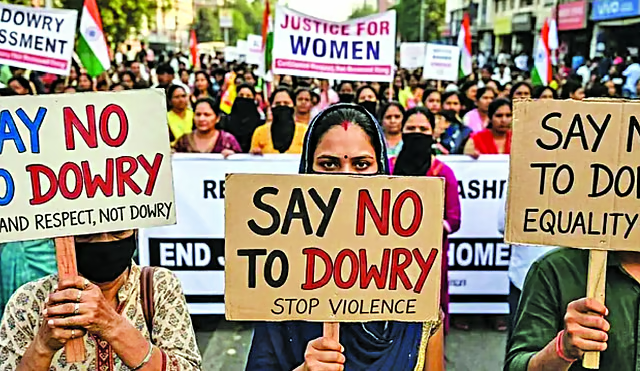
The dowry system, a centuries-old custom, has long been a cornerstone of matrimonial traditions in many societies, is another form of cultural oppression of women. Defined as an amount of property or money brought by a bride to her husband upon marriage, this practice transcends boundaries of caste, wealth, and poverty. Its roots trace back to at least 200 BCE, with historical records indicating its prevalence in medieval Western Europe. The practice of dowry involves the transfer of parental property, wealth, or goods to the groom and his family as part of a marriage arrangement. This tradition often reflects the social, cultural, and economic dynamics of a society, influencing marriage customs and kinship relationships. The concept of dowry varies significantly across cultures, affecting how marriages are formed, viewed, and sustained within different kinship systems.
This tradition, though often unspoken in modern discourse, remains prevalent in parts of South Asia, Africa, the Middle East, and some Asian communities in the United Kingdom. In recent years, rather than fading away, it has alarmingly grown in scale and complexity, despite laws and social campaigns aimed at curbing its influence.
Historically, the dowry was a well-intentioned tradition. Dowry served as a marker of social and economic conditions, highlighting the connection between marriage and family wealth and status. In cultures where dowry is customary, it often represents the bride’s family’s commitment to her future security and well-being. This practice can also reveal societal power structures, emphasizing gender roles and expectations surrounding marriage and kinship.
It originated as a gesture to ensure the financial security of the bride in her marital home. Gifts such as jewelry, land, or livestock were given to symbolize goodwill and cement familial bonds. In many cultures, the dowry represented the union of two families and was perceived as a token of respect and care for the bride. However, this noble tradition gradually underwent a profound transformation. Over time, it shifted from being a gesture of goodwill to a coercive demand, driven by social and economic pressures. This evolution has led to the dowry becoming a deeply exploitative practice.
In the Indian subcontinent, dowry has been a longstanding tradition, particularly in arranged marriages. After the wedding, brides typically move into their husband’s joint family, which includes his parents, brothers, and unmarried sisters. In many rural villages, these families live together under one roof. In areas where dowry is heavily practiced, the groom’s family often demands substantial payments and other gifts from the bride’s family as a condition of marriage. The dowry system is not just a financial transaction; it carries profound cultural implications. In some societies, a bride’s dowry is seen as a reflection of her family’s status and generosity. The size and value of a dowry can influence a bride’s social standing and the way she is treated within her marital household. In societies where marriage payments are closely associated with family status, wealth, and social expectations, dowry may become more than a customary exchange of gifts; it can also reflect broader social hierarchies and economic aspirations.
In parts of contemporary South Asia, dowry has become more than a traditional gift exchanged at marriage. In some communities, families of brides face strong social pressure to provide cash, jewelry, household goods, property, vehicles, or other valuable items to the groom and his family. What may once have been presented as a voluntary gesture of goodwill can, in some cases, become an expected condition of marriage or a demand that the bride’s family feels unable to refuse. The financial burden can be especially severe for families with limited incomes. Parents may be forced to borrow money, sell land or other property, use their savings, or take on years of debt simply to meet expectations surrounding their daughter’s marriage.
The consequences can extend well beyond the wedding itself. A family that spends a large portion of its resources on a daughter’s marriage may have fewer resources available for education, healthcare, housing, or the needs of other family members. In extreme cases, families may face prolonged financial hardship because of debts taken on to meet dowry demands. The pressure can also affect girls and young women before they are even married. When daughters are viewed as requiring a large financial investment while sons are seen as potential economic contributors to the family, children may not be valued equally. Parents may prioritize sons’ education or opportunities while limiting what they invest in their daughters.
Dowry practices can therefore reinforce a wider system of gender inequality. At their core is the harmful idea that a daughter represents a financial burden that must eventually be transferred to another family through marriage. This can reduce a woman’s sense of independence and reinforce the belief that her value is connected to her ability to fulfill expectations as a wife and daughter-in-law. It is important, however, to recognize that dowry practices differ greatly across South Asia and among different communities. Many families and social movements actively reject dowry and work to promote marriages based on equality, mutual respect, and the dignity of both women and men.
The persistence of dowry-related abuse highlights the ineffectiveness of existing laws in addressing the deep-rooted societal norms that perpetuate this practice. This centuries-old tradition remains a significant threat to women, as legal measures alone have been insufficient to eradicate its harmful impacts. The ramifications of the dowry system are far-reaching and often devastating. In some cases, the dowry a bride brings may be deemed insufficient by her husband and his family, leading to demands for additional payments. The most glaring manifestation is the phenomenon of dowry-related violence.
Failure to meet escalating dowry demands has, in some cases, had devastating consequences for brides. Women subjected to harassment and abuse over dowry have sometimes been killed, including through deliberate burning, while some deaths have been presented as accidents or suicides. In particularly extreme cases, the killing of a wife could enable the husband to remarry and receive another dowry from a new bride’s family. Scholarly research has documented links between dowry disputes, domestic violence, and dowry-related deaths in India. Researchers have also identified a potential economic incentive in some cases: following a wife’s death, a husband may be able to remarry and receive another dowry from the family of a new bride. While not universal, such abuse is prevalent enough to raise significant concern. In January 2025, a tragic incident underscored the severity of this issue: a 21-year-old woman in Shamli district, Uttar Pradesh, India, was allegedly strangled to death by her in-laws over unmet dowry demands, according to a police report. From the time of her marriage, her in-laws had been pressuring her family for additional dowry, and when these demands were not fulfilled, her life was cruelly taken.
In India, thousands of innocent brides suffer tragic fates each year as their families struggle to meet escalating dowry demands. Experts from non-governmental organizations estimate that as many as 25,000 Hindu brides are burned annually, with the highest rates occurring in New Delhi, followed by the states of Punjab, Haryana, and Uttar Pradesh. In extreme cases, disputes over dowry demands escalate to physical and psychological abuse. Dowry deaths—instances where brides are killed (often framed as suicides) due to unmet dowry demands—remain a grim reality. Between 2017 and 2022, crime data recorded 35,493 brides killed due to inadequate dowries.
Despite dowries being outlawed since 1961, they remain entrenched in 90 percent of Indian marriages, according to a recent study. A 2021 World Bank analysis of dowry practices in rural India found that dowry remained remarkably widespread despite being illegal. Drawing on data from roughly 40,000 marriages recorded between 1960 and 2008, the study found that dowry was paid in approximately 95 percent of marriages. The researchers also found that dowry payments could amount to several years of household income, placing a substantial financial burden on the families of brides. The study also found that average real dowry payments remained remarkably stable over this period, despite significant social and economic changes. In response to growing concerns over dowry-related violence, India introduced significant legal reforms during the 1980s. The Criminal Law (Second Amendment) Act of 1983 introduced Section 498A of the Indian Penal Code, criminalizing cruelty by a husband or his relatives. In 1986, a further amendment introduced Section 304B, which specifically defined and penalized dowry deaths. Under this provision, a person convicted of causing a dowry death faces a minimum prison sentence of seven years, which may extend to life imprisonment. Despite these legal efforts, the challenge of eradicating harmful dowry practices persists, underscoring the need for continued reform and cultural change.
In Sri Lanka, dowries typically include significant assets such as houses, rice fields, household furnishings, vehicles, jewelry, and cash. This practice often depletes the family’s resources, leaving little for sons and other daughters to inherit. Despite the lack of legal sanctions against dowries in Sri Lanka, women’s rights campaigners have been vocal in advocating for a ban on the practice. Similarly, across parts of Southeast Asia, marriage-related financial and property transfers remain an important cultural practice. In some communities, these customs place substantial financial demands on families and may involve the transfer of assets from the bride’s family. However, the nature, direction, and significance of these payments vary across countries and cultural groups.
Historically, dowry practices have existed in various parts of the world, including the Middle East and Europe. Today, their prevalence and social significance vary by country, community, religion, and family tradition. Marriage-related financial customs across the Middle East are diverse, reflecting cultural traditions, religious beliefs, local laws, and family expectations. These practices differ not only among Arab, Persian, Turkish, and other communities, but also between Middle Eastern and Western societies.
In Islamic marriages, a distinct form of marriage-related payment known as mahr is traditionally required. It is a gift, which may consist of money, property, or another agreed-upon asset, that the groom gives directly to the bride. Unlike a conventional dowry provided by the bride’s family, mahr belongs exclusively to the bride and is her personal property. The Qur’an specifically instructs men to give women their bridal gifts willingly.
The resilience of the dowry system highlights the challenges of dismantling deeply ingrained customs. While modernization and education have brought about some changes, the cultural significance of marriage as a milestone continues to uphold dowry practices. Families often view the provision of a substantial dowry as a means to secure their daughters’ futures and ensure social acceptance.
CONCLUSION
Addressing the dowry system requires a multi-faceted approach. Legal reforms must be accompanied by robust enforcement mechanisms to deter offenders. Education and awareness campaigns can play a pivotal role in challenging traditional mindsets and promoting gender equality. Empowering women through education, employment, and legal rights can help break the cycle of dependency and vulnerability that underpins the dowry system.
In the broader context, societal attitudes towards marriage and gender roles must evolve. Recognizing the inherent value of daughters and challenging patriarchal norms are essential steps towards eradicating dowry-related practices. By fostering a culture of equality and respect, societies can move closer to ending this exploitative tradition.
Dowry and dowry deaths are not merely remnants of tradition—they are human rights violations that perpetuate gender inequality, violence, and systemic injustice. While cultural practices can hold valuable meaning, they must evolve to reflect modern principles of equality and dignity. Ending the dowry system is not just about protecting women—it is about building a society that values humanity over materialism, justice over tradition, and love over transaction.